As an HSE professional, I’ve walked through a thousand noisy worksites from roaring compressor stations to bustling tarmacs and hammering construction zones. And in each of these places, one thing is non-negotiable: hearing protection. Among the many tools in our safety arsenal, one device stands out for its simplicity, reliability, and adaptability.
But if you’re new to industrial safety or occupational health, you might ask: What does earmuffs mean, really? In this post, I’ll break down the concept of earmuffs not just as a product, but as a life-long protector of hearing health and how they fit into your safety program from an HSE perspective.
What Does “Earmuffs” Mean in HSE?
In the world of occupational health and safety, earmuffs refer to hearing protection devices worn over the ears to shield workers from hazardous levels of noise. While the public often associates earmuffs with cold weather, in our industry, they are certified PPE (Personal Protective Equipment).
As per OSHA, hearing protection like earmuffs must be provided to workers when noise exposure equals or exceeds 85 decibels (dBA) as an 8-hour time-weighted average (TWA).
The Technical Definition
“Cup-style hearing protectors that completely enclose the outer ear and use soft cushions to create an acoustic seal against noise. These may incorporate passive foam insulation or active noise-canceling components.”
In layman’s terms: Earmuffs block noise. And they do it well.
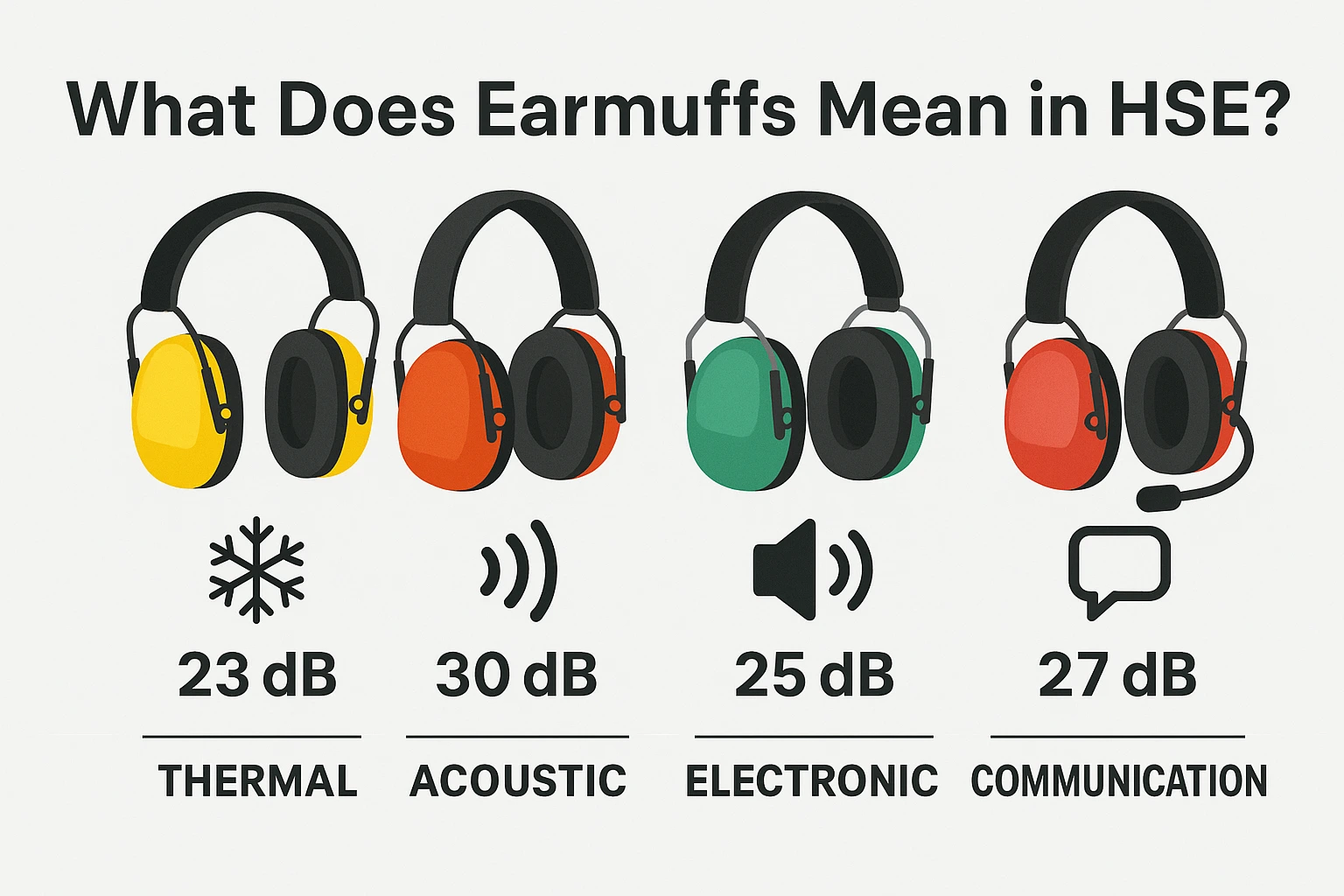
Types of Earmuffs Relevant to HSE Practice
1. Passive (Foam-Insulated) Earmuffs
- Dense foam padding to block sound
- Adjustable headbands for proper fit
- Durable plastic cups that fully enclose the ear
2. Active Noise-Canceling Earmuffs
- Microphones to detect external noise
- Internal circuitry to generate opposing sound waves
- Often dual-use as communication devices
3. Communication Earmuffs (Talk-Through Systems)
- Hearing protection and real-time communication
- Ideal for airport ground staff, rigs, and emergency response
- Environmental awareness and clear audio transmission
Why Earmuffs Are Critical in Occupational Health & Hearing Conservation
Hearing loss is invisible, irreversible, and permanent. According to the CDC, occupational hearing loss is one of the most common work-related illnesses in the U.S.
As an HSE Professional, Here’s What I Look For:
- Noise Level: Is the workplace over 85 dB TWA?
- Exposure Duration: Even moderate noise is harmful if prolonged.
- Fit and Comfort: Poor fit reduces protection.
- Training & Compliance: Improper use makes earmuffs ineffective.
- Integration with Helmets/Glasses: Compatibility matters on-site.
Regulatory Standards
OSHA 29 CFR 1910.95 (U.S.)
- Requires hearing protection over 85 dB TWA
- Enforces training and audiometry testing
ANSI S3.19 / S12.6
Covers testing methods and NRR standards.
EN 352 (EU)
European earmuff certification including electrical resistance and attenuation requirements.
Integrating Earmuffs into Your Safety Program
Conduct a Noise Assessment
Use sound meters or acoustic engineers to determine dB zones and worker exposure.
Provide Suitable PPE Based on Assessment
- Intermittent noise: Consider earplugs
- Constant high noise: Use earmuffs
- Extreme zones: Use both
Educate and Train
Train employees on the right way to wear earmuffs. Reinforce with posters and toolbox talks.
Case Studies — When Earmuffs Saved the Day
Case 1: Airport Maintenance Crew, Karachi
Engine testing noise hit 110 dB. After switching to NRR 30 earmuffs with Bluetooth, complaints dropped and productivity rose.
Case 2: Cement Plant in UAE
Welders exposed to 95 dB. Mandatory earmuff use reduced headaches and improved worker health over a 3-month period.
Pros and Cons in the Field
Pros
- High noise reduction
- Reusable and visible
- Easy to monitor PPE compliance
Cons
- Can be hot and bulky
- May interfere with helmets or specs
- Higher cost for advanced models
My Pro Tips for Earmuff Usage on Site
- Choose replaceable pad models
- Use high-visibility colors
- Do Day-1 fit testing
- Pair with earplugs for double protection
- Store properly to avoid damage
FAQs from Workers — And How I Answer Them
Q: “Why can’t I just use my AirPods?”
A: AirPods aren’t PPE. They don’t reduce decibels and can mask alarms or hazards.
Q: “Are cheap earmuffs okay?”
A: Only if certified. No certification = no real protection.
Q: “What if I already have hearing damage?”
A: Even more reason to protect what’s left. Hearing loss is permanent.
As an HSE professional, I believe safety is not just about compliance — it’s about culture. And earmuffs are a small but powerful part of that culture. They protect hearing, prevent stress, and help reinforce our message: every sense matters.
So take a moment, check your PPE stock, and ask: Are your workers’ ears truly protected?
Managed by the LinkedIn HSE Professionals Page, this platform supports safety officers, auditors, and managers worldwide. With a network of 340,000+ professionals, we deliver expertly crafted HSE templates, checklists, and tools to help organizations meet OSHA, ISO, and GCC safety standards.